Tell us about the job
Takes about a minute. No obligation.
A furnace repair call in Franklin Parish starts with the contractor working out what the equipment has already been through. Homes in Franklin Parish, LA run heat about five months a year, from November through March. That load falls on a short list of parts: the burner, the ignition system, and the heat exchanger cycle every time the thermostat calls for heat and stop when it does not. By the end of a full heating season, those components have accumulated the kind of wear that shows up as cracked exchangers, weak igniters, and burners that hesitate to light. A contractor diagnosing a fault here checks those parts before looking elsewhere.
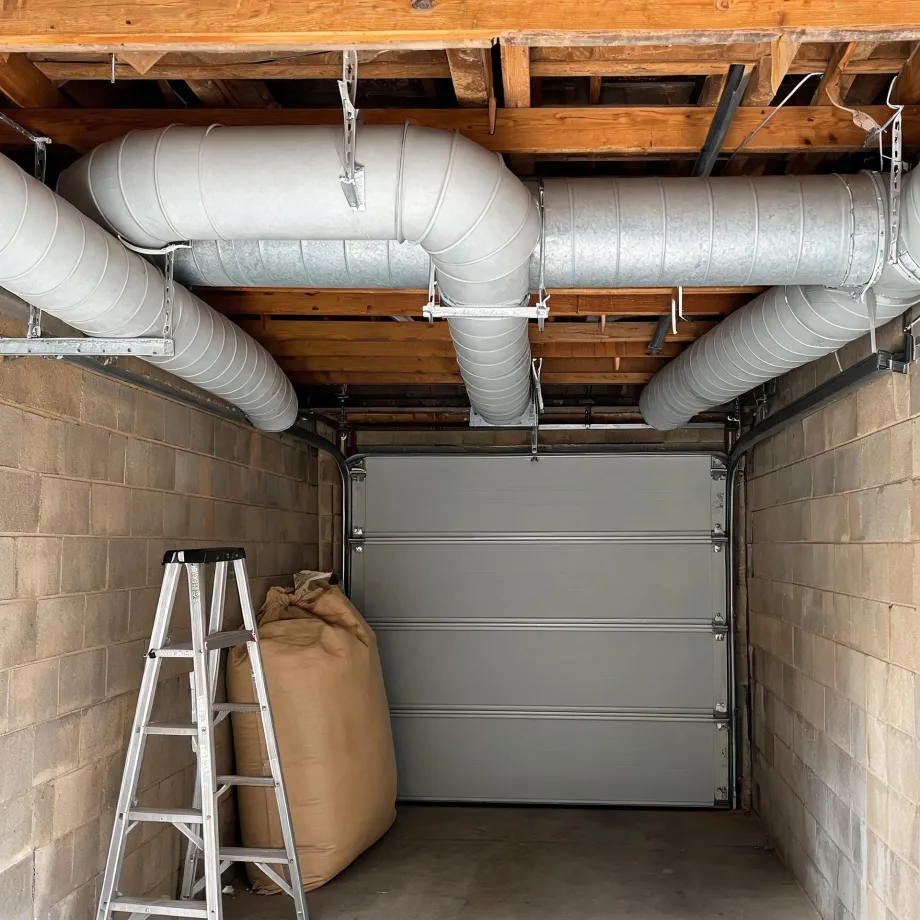
Furnace repair in older housing stock runs into a particular problem: the systems inside these houses have cycled through enough heating seasons that wear shows up not at the thermostat but inside the heat exchanger, on the burner orifices, and in the limit switches that have opened and closed hundreds of times. Half the homes in Franklin Parish, Louisiana were built in 1978 or earlier (2020-2024 ACS 5-year). A contractor opening a furnace in a house that age finds components whose replacement parts are sometimes discontinued, which changes the repair from a straightforward swap to a sourcing problem. That answer only comes from what the opened unit contains, not from the age on the permit.
The Parts of a Furnace a Contractor Checks First
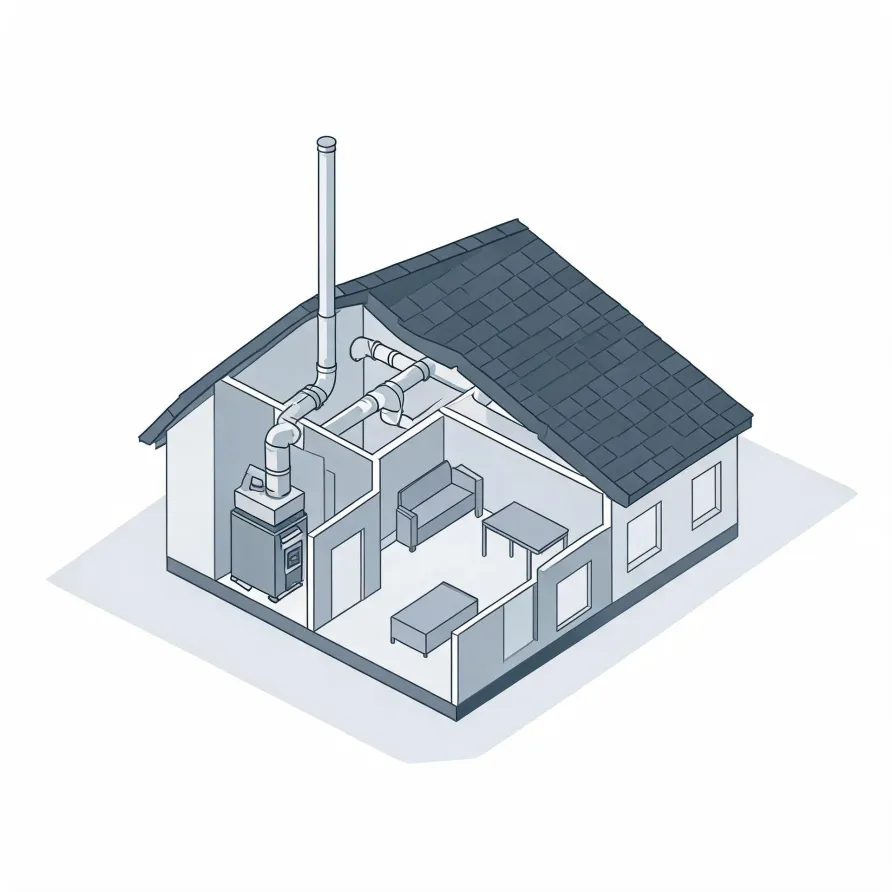
The heat exchanger sits at the center of the furnace cabinet, and it is where a contractor looks when the system runs but heat is weak or uneven. The burner assembly feeds it flame, and a cracked exchanger or a dirty burner shows up fast in how air feels at the register.
The blower motor and its wheel pull air across the heat exchanger and push it into the supply side of the duct system. The inducer motor, the igniter, and the control board sit nearby inside the cabinet. When a furnace short-cycles, runs noisily, or fails to start, those are the components a contractor works through.
The drawing shows the general layout of a furnace system, and a licensed contractor determines which parts apply to the specific unit and installation in your home.
Get matched in Franklin ParishFranklin Parish, Louisiana, by the numbers
97 severe weather events were recorded in Franklin Parish, Louisiana between 2015 and 2024.
NOAA National Centers for Environmental Information, Storm Events Database, bulk CSV export, events 2015-01-01 through 2024-12-31.Half the homes in Franklin Parish, Louisiana were built in 1978 or earlier (2020-2024 ACS 5-year).
U.S. Census Bureau, 2020-2024 American Community Survey 5-Year EstimatesFranklin Parish, Louisiana holds 8,926 housing units (2020-2024 ACS 5-year).
U.S. Census Bureau, 2020-2024 American Community Survey 5-Year EstimatesOwners occupy 73.2% of the occupied homes in Franklin Parish, Louisiana (2020-2024 ACS 5-year).
U.S. Census Bureau, 2020-2024 American Community Survey 5-Year EstimatesCodes & Standards Behind Furnace Repair in Franklin Parish, Louisiana5 sourced rules and standards
What HVAC Repair Looks Like in Franklin Parish
Non-weatherized gas furnaces manufactured on or after November 19, 2015 must reach 80.0 percent AFUE.
Non-weatherized oil-fired furnaces manufactured on or after November 19, 2015 must reach 83.0 percent AFUE.
Mobile home gas furnaces manufactured on or after November 19, 2015 must reach 80.0 percent AFUE.
Non-weatherized gas furnaces manufactured on or after December 18, 2028 must reach 95.0 percent AFUE, up from the 80.0 percent minimum that applies to units manufactured before that date.
Licensing Rules for HVAC Repair in Franklin Parish, Louisiana
Louisiana requires an active state contractor licence: it is unlawful to engage or continue in the business of contracting, or to act as a contractor, without one.
Severe Weather Events in Franklin Parish
Extreme weather puts real strain on heating equipment, and furnaces in Franklin Parish work in conditions that vary sharply from year to year. How hard that equipment runs, and how often it needs repair, follows directly from what the local climate demands.
97 severe weather events, 2015–2024. Source: NOAA National Centers for Environmental Information, Storm Events Database.