Tell us about the job
Takes about a minute. No obligation.
Sizing a furnace for a St. Landry Parish home is the decision a contractor has to get right before anything else, because the equipment that goes in will cycle hard through every heating season it sees. Homes in St. Landry Parish, LA run heat about five months a year, from November through March. The burner and heat exchanger carry that load repeatedly, and a system undersized at installation strains those components on every cold cycle. An oversized unit short-cycles, which wears the ignition system faster than steady runtime would. A contractor running a proper load calculation accounts for the house's envelope and duct layout before committing to a unit, not after.
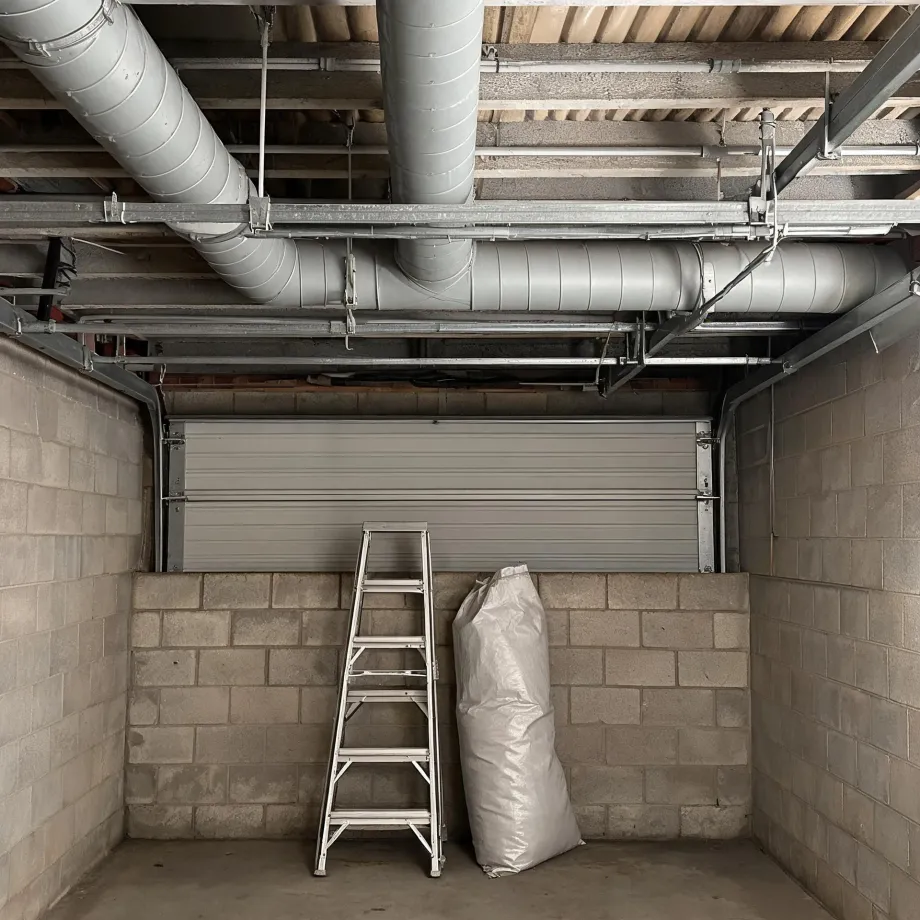
Ductwork laid in for an earlier generation of equipment does not automatically carry what a modern furnace needs, and in St. Landry Parish that mismatch is what shapes the scope of an installation job before the new unit is even on the floor. Half the homes in St. Landry Parish, Louisiana were built in 1980 or earlier (2020-2024 ACS 5-year). That puts a large share of the housing stock in the range where original duct runs were sized for whatever came before, not for the unit going in today. A contractor opening up the supply and return system here is checking whether the existing layout moves enough air for the new furnace's output, and where it falls short, that work gets priced alongside the equipment.
What Gets Installed With a New Furnace
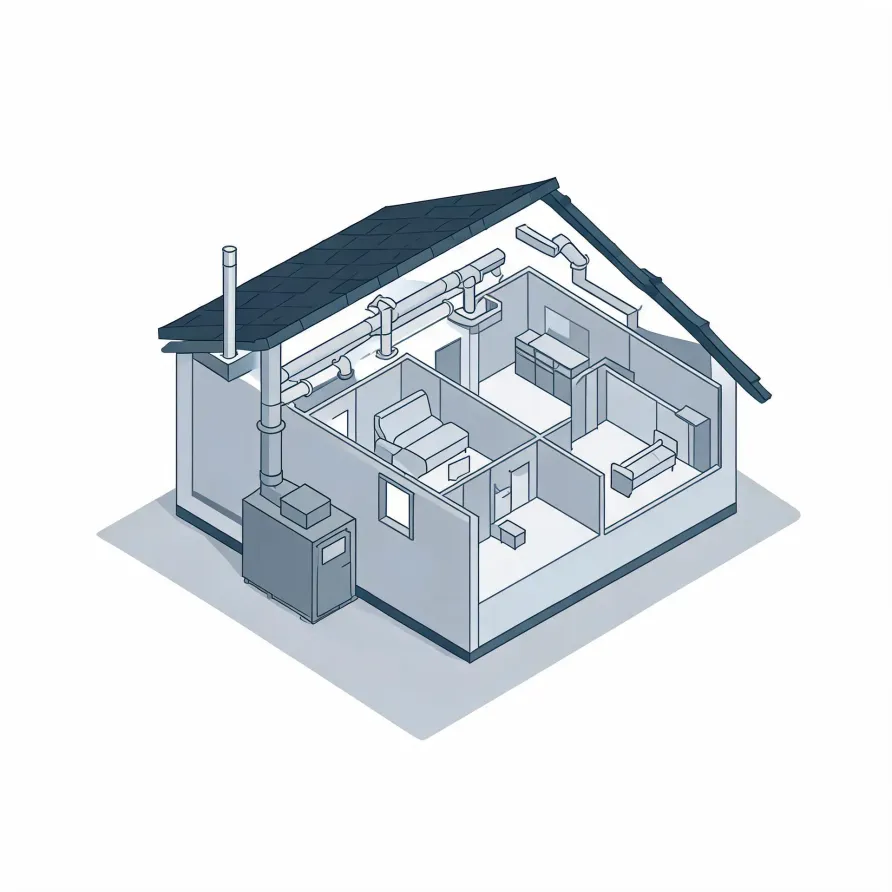
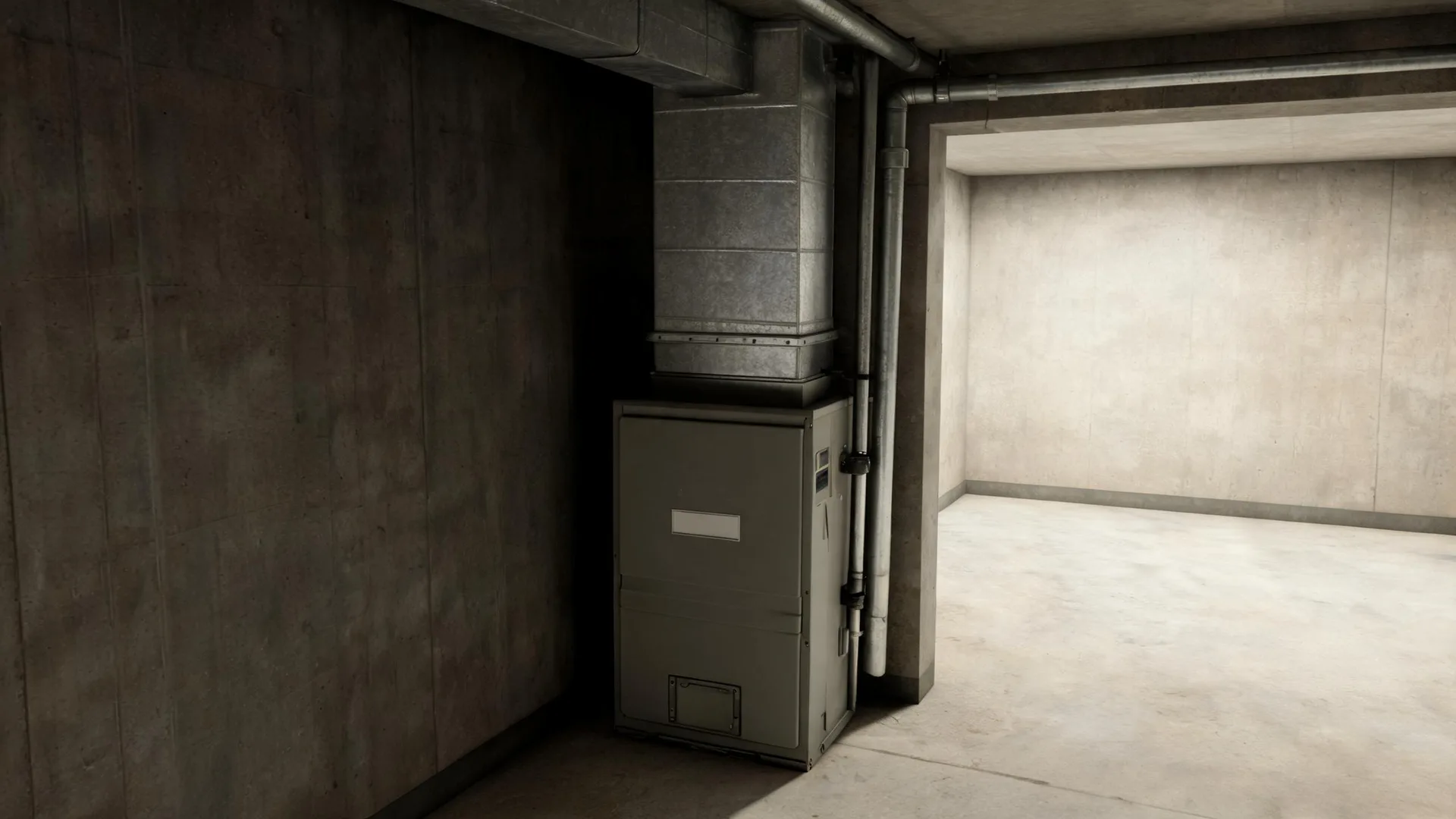
The furnace itself sits in a utility space, basement, or closet near the center of the house. It holds the burner assembly, the heat exchanger, and the blower. The burner draws in gas and ignites it, the heat exchanger warms the air around it, and the blower pushes that warmed air into the supply ducts.
The flue pipe runs from the furnace to an exterior wall or roof and carries combustion gases out of the house. Alongside that, the contractor installs a gas line connection at the furnace, a condensate drain on high-efficiency models, and a new thermostat on the wall where the homeowner controls the system.
The drawing shows a typical layout, and a licensed contractor determines what the installation requires in your specific home.
Get matched in St. Landry ParishSt. Landry Parish, by the numbers
79 severe weather events were recorded in St. Landry Parish, Louisiana between 2015 and 2024.
NOAA National Centers for Environmental Information, Storm Events Database, bulk CSV export, events 2015-01-01 through 2024-12-31.Half the homes in St. Landry Parish, Louisiana were built in 1980 or earlier (2020-2024 ACS 5-year).
U.S. Census Bureau, 2020-2024 American Community Survey 5-Year EstimatesSt. Landry Parish, Louisiana holds 37,229 housing units (2020-2024 ACS 5-year).
U.S. Census Bureau, 2020-2024 American Community Survey 5-Year EstimatesOwners occupy 70.1% of the occupied homes in St. Landry Parish, Louisiana (2020-2024 ACS 5-year).
U.S. Census Bureau, 2020-2024 American Community Survey 5-Year EstimatesFurnace Installation Rules for St. Landry Parish, Louisiana5 codes, standards & laws
What the installation actually looks like
Non-weatherized gas furnaces manufactured on or after November 19, 2015 must reach 80.0 percent AFUE.
Non-weatherized oil-fired furnaces manufactured on or after November 19, 2015 must reach 83.0 percent AFUE.
Mobile home gas furnaces manufactured on or after November 19, 2015 must reach 80.0 percent AFUE.
Non-weatherized gas furnaces manufactured on or after December 18, 2028 must reach 95.0 percent AFUE, up from the 80.0 percent minimum that applies to units manufactured before that date.
Licensing Rules for HVAC Work in St. Landry Parish, Louisiana
Louisiana requires an active state contractor licence: it is unlawful to engage or continue in the business of contracting, or to act as a contractor, without one.
Severe Weather Events in St. Landry Parish
Weather puts a measurable load on heating equipment, and that load varies by where you live. A furnace sized and installed for St. Landry Parish conditions handles what this area actually throws at it, not an average drawn from somewhere else.
79 severe weather events, 2015–2024. Source: NOAA National Centers for Environmental Information, Storm Events Database.