Tell us about the job
Takes about a minute. No obligation.
Sizing a furnace for Acadia Parish starts with the actual heating load, not a square-footage guess. Homes in Acadia Parish, LA run heat about five months a year, from November through March. A burner and heat exchanger that cycle through that whole window accumulate real wear on the ignition system and the heat exchanger core. A unit undersized for this load runs longer each cycle to keep up, which pushes those components harder and shortens the interval before a contractor is back to replace them. A licensed installer works out the load calculation before specifying equipment, because a box that fits the house on paper but not the season fails in a predictable way.
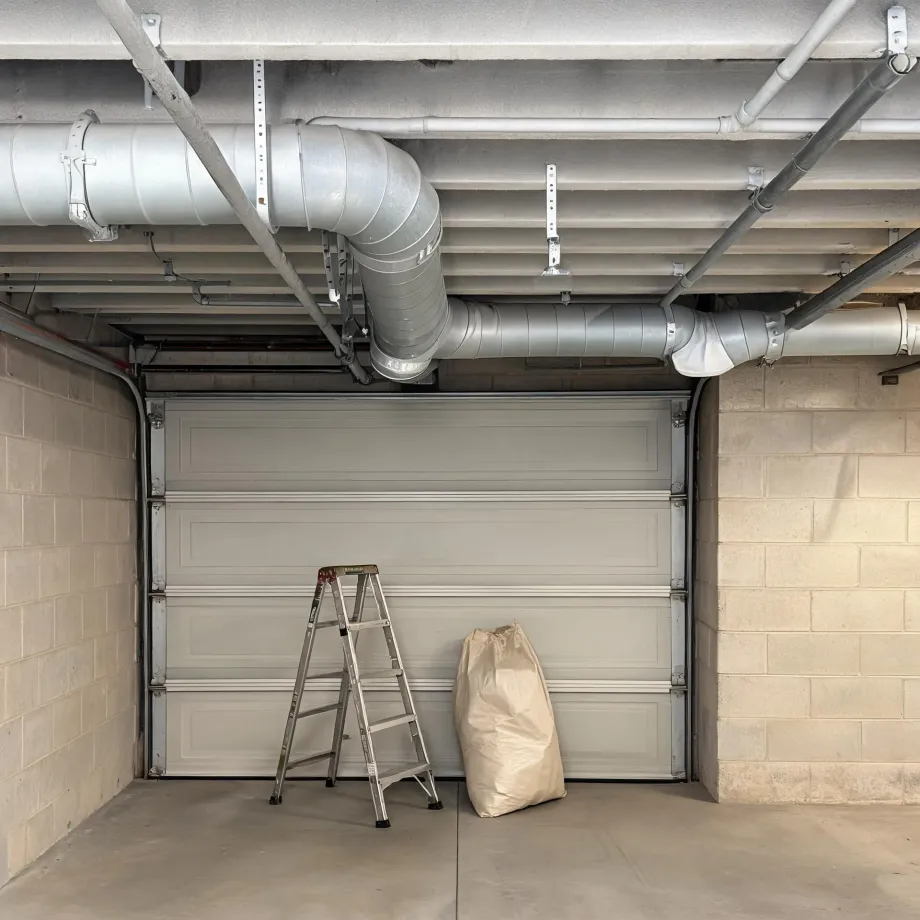
Ductwork laid down for an older system and an older load is the variable a furnace installation turns on in Acadia Parish. Half the homes in Acadia Parish, Louisiana were built in 1980 or earlier (2020-2024 ACS 5-year). Trunks and branches sized for equipment that no longer exists in the house shape what a contractor can do with a new unit, and they have to be measured and checked before any equipment gets priced. If the existing runs cannot carry the new system, the duct work becomes part of the job, and the quote changes accordingly. The electrical service gets the same look, because a new furnace draws what it draws regardless of what the panel was originally built for.
What Gets Installed With a New Furnace
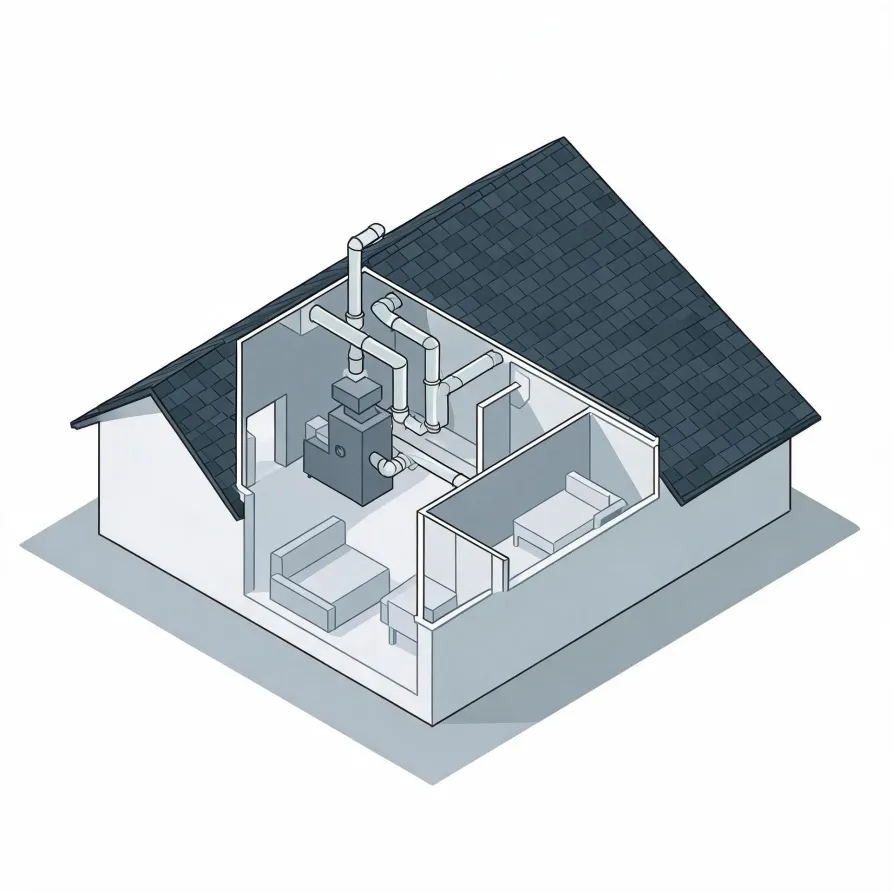
The furnace itself sits inside the house, most often in a utility closet, basement, or attic. It holds the burner assembly, the heat exchanger, and the blower, all housed together in one cabinet. The burner draws fuel, the heat exchanger warms the air around it, and the blower pushes that air into the supply ducts.
The flue pipe runs from the furnace cabinet to an exterior wall or through the roof, carrying combustion gases out of the house. Alongside that, the contractor installs the air handler components where needed and connects the thermostat, which mounts on an interior wall and tells the furnace when to fire.
The drawing shows a typical layout, and a licensed contractor determines exactly what applies to your home.
Get matched in Acadia ParishAcadia Parish, by the numbers
81 severe weather events were recorded in Acadia Parish, Louisiana between 2015 and 2024.
NOAA National Centers for Environmental Information, Storm Events Database, bulk CSV export, events 2015-01-01 through 2024-12-31.Half the homes in Acadia Parish, Louisiana were built in 1980 or earlier (2020-2024 ACS 5-year).
U.S. Census Bureau, 2020-2024 American Community Survey 5-Year EstimatesAcadia Parish, Louisiana holds 25,107 housing units (2020-2024 ACS 5-year).
U.S. Census Bureau, 2020-2024 American Community Survey 5-Year EstimatesOwners occupy 67.0% of the occupied homes in Acadia Parish, Louisiana (2020-2024 ACS 5-year).
U.S. Census Bureau, 2020-2024 American Community Survey 5-Year EstimatesCodes & Standards Behind Furnace Installation in Acadia Parish, Louisiana5 sourced rules and standards
What the Installation Actually Looks Like
Non-weatherized gas furnaces manufactured on or after November 19, 2015 must reach 80.0 percent AFUE.
Non-weatherized oil-fired furnaces manufactured on or after November 19, 2015 must reach 83.0 percent AFUE.
Mobile home gas furnaces manufactured on or after November 19, 2015 must reach 80.0 percent AFUE.
Non-weatherized gas furnaces manufactured on or after December 18, 2028 must reach 95.0 percent AFUE, up from the 80.0 percent minimum that applies to units manufactured before that date.
Licensing and Legal Requirements in Acadia Parish, Louisiana
Louisiana requires an active state contractor licence: it is unlawful to engage or continue in the business of contracting, or to act as a contractor, without one.
Severe Weather History in Acadia Parish
Acadia Parish weather puts real demands on heating equipment, and those demands shape what a furnace installation here needs to handle. A unit sized and installed for local conditions lasts longer and works harder when the climate asks it to.
81 severe weather events, 2015–2024. Source: NOAA National Centers for Environmental Information, Storm Events Database.