Send the form and stop researching installers for the new furnace.
Most homes in Baton Rouge heat with electricity, and winters here are mild, so the furnace doesn't work hard compared to places with real cold. That's exactly why a furnace here can fail quietly instead of all at once. It might run short cycles, blow lukewarm air, or trip the breaker on the coldest nights of the year, which in Baton Rouge might only be a handful of nights total. Because the need is so seasonal, a lot of homeowners here put off dealing with it. The furnace only has to work for a few weeks a year, so a weak one limps along instead of forcing the issue.
But a furnace that's struggling doesn't stay the same. It gets less reliable, and it can get less safe, especially with any system that uses a flame. Knowing whether yours needs a repair or a full replacement isn't something you can tell from one bad night. It depends on the age of the unit, what's actually failing inside it, and whether the parts it needs are even still made.
That's the part that takes the time. Not the decision itself, but getting someone qualified to look at the actual unit in your actual house and tell you straight whether it's worth fixing or worth replacing. Normally that means calling around to a few companies, explaining the same symptoms three or four times, waiting on quotes, and trying to compare answers from people who never saw the same thing.
Send the form on this page and that search is done for you. You won't be the one tracking down who's available or sorting through estimates that don't match up. A licensed contractor who installs furnaces in East Baton Rouge Parish gets your information, and from there, finding help stops being something you have to manage yourself.
Most furnaces here last 15 to 20 years, and age is the first thing worth checking, since a furnace that old is working against worn parts even in a mild Baton Rouge winter. After that, watch what it actually does. A furnace that cycles on and off every few minutes, takes longer than it used to warm the house, or runs up your bill without a change in use is wearing out, even if it hasn't failed outright. Rust around the burner or a yellow flame instead of blue both mean the unit needs a look before it needs a decision. If a repair would cost close to half of what a new furnace runs, most homeowners replace rather than patch it again, because the next failure is never far behind the last one. In a place where winters are short, a furnace doesn't get the hours of use that wear it out fast, but once it starts failing, it tends to keep failing.
How cold does it actually get, and how long does the furnace run?
Winter nights average 42°F
Nights sit around 42°F all winter, not far below room temperature, so a furnace here is rarely asked for its full output.
Heat runs November through March
Five months of use a year is a short working life for a furnace compared to colder states, which is part of why trouble shows up late.
64.7% of homes heat with electricity
With most homes running electric heat, a furnace that's struggling often means a heat pump or electric furnace nearing the end of its run.
NOAA nClimDiv 1991-2020 · ACS 2020-2024
Repair makes sense now
If the furnace is under 15 years old and the problem is a single part, like an igniter or a flame sensor, repair is the cheaper path and usually the faster one. A furnace that's kept up and still heats evenly when it runs, with no cracks or soot around the burner, has more life left in it. Given how little Baton Rouge winters ask of a furnace, a sound unit with one bad part can keep going for years without the issue coming back.
Replacement is the better call
Past 15 years, repairs start treating symptoms of a furnace that's wearing out everywhere at once, not just in the part that failed. If it's cycling too often, blowing air that isn't warm, or you've had more than one repair in the last year or two, the next failure is already on its way. Mild winters mean a dying furnace here can limp along for a while instead of quitting outright, which makes it easy to keep patching something that's past the point worth saving.
Skip the round of in-home estimates for a new furnace.
No charge to send it. You decide if you hire them.
Electric heat strips as backup
Most furnaces here are gas furnaces paired with an electric air conditioner, but some homes heat with electric resistance coils instead, especially in smaller or newer houses. Electric furnaces don't have an igniter or a flame sensor to fail, so the warning signs are different. Watch for a breaker that trips when the heat kicks on, or rooms that stay cool no matter how long it runs. Check which kind you have before you judge it by symptoms that apply to gas.
What short cycling does over time
A furnace that shuts off a few minutes after starting is working harder, not easier, even though it runs less. Each start pulls more current and puts more strain on the igniter or the heat strips than a full run would. Over a mild Baton Rouge winter that might mean a few hundred extra cycles a furnace in a colder climate would never see. The equipment ages by cycles as much as by hours, so a furnace that short cycles all season can wear out faster than one that just runs long and steady.
Is your furnace trying to tell you something?
You might notice the air coming out isn't as warm as it used to be, even though the furnace is running. Maybe it clicks on, runs for a few minutes, shuts off, then starts again a little while later. Some rooms stay cold while others get heat. You might hear a rattle when it starts up, or notice a burning smell the first few times you use it each year that doesn't go away. A yellow flame instead of blue, soot near the vents, or a furnace that smells like gas are signs worth taking seriously, since they can point to a cracked heat exchanger or a venting problem that puts carbon monoxide into the house.
Working the way it should
A furnace like this heats evenly, cycles on for a stretch, and shuts off clean. No burning smell, no soot around the cabinet, no short cycling. If yours still does this, the parts inside are doing their job.
Running on borrowed time
An older furnace like this can still run, but listen for what it's not doing. A delayed start, a rattle in the blower, or heat that feels weaker than it used to all point to parts wearing out, not just age on a calendar.
Before you get your furnace installationAfter you get your furnace installation
Running clean
Flue pipes and ductwork tight, no rust on the cabinet, no soot around the burner. A furnace like this heats evenly when it comes on and shuts off without a fight. If yours still looks like this after 15 years in a Baton Rouge basement, it's earned its keep.
Running on borrowed time
Galvanized ductwork like this, old flue pipe, a water heater crowded in next to it. A furnace this age in a setup like this has likely seen one or two repairs already. Rust on the jacket or a scorch mark near the burner means the next failure isn't far off.
Winter nights average 42°F
42°F is mild enough that your furnace never has to push hard to catch up. It can idle along on low output for months, and a cracked heat exchanger or weak igniter can hide behind that easy work until the one or two nights it drops further and the furnace has to prove itself.
NOAA nClimDiv 1991-2020
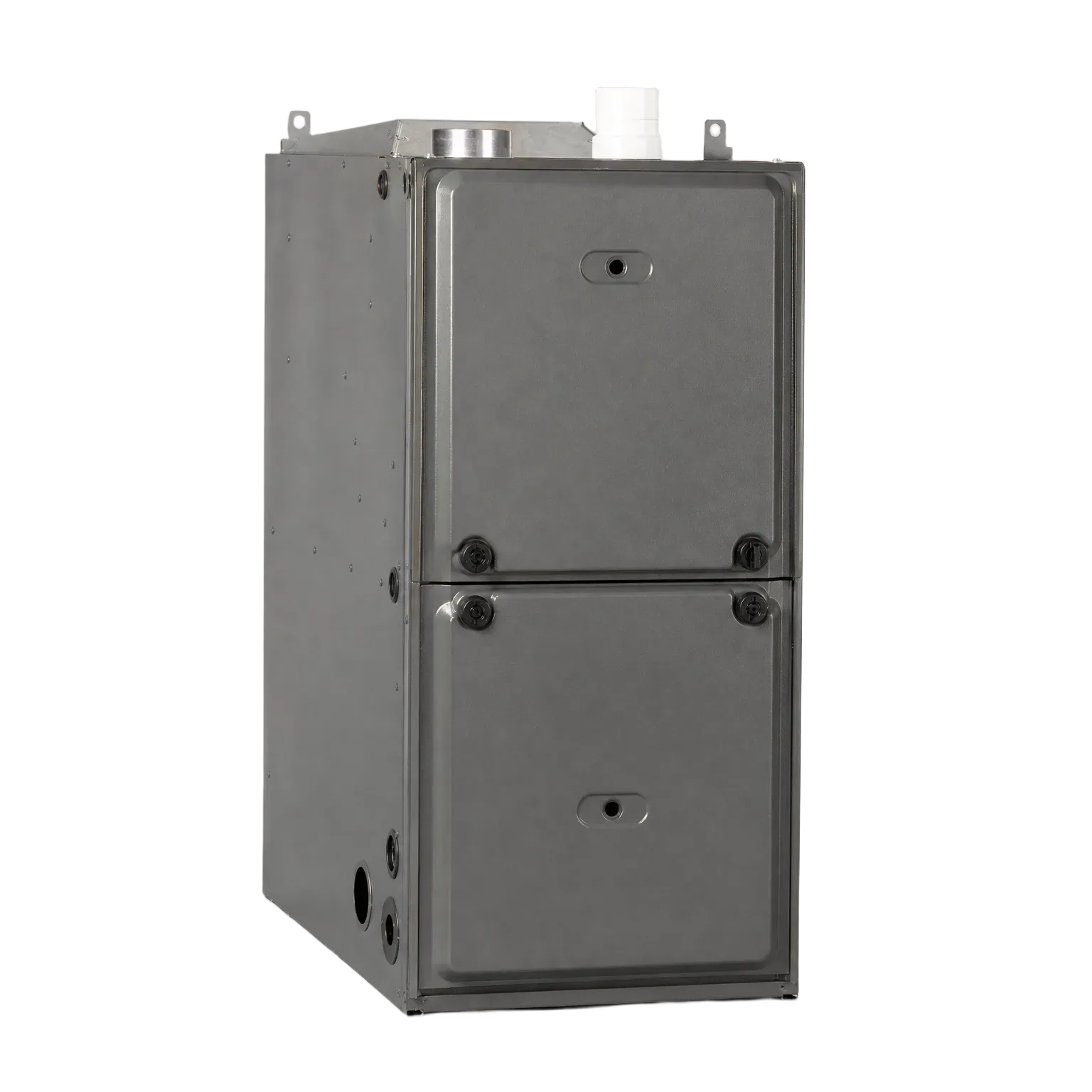
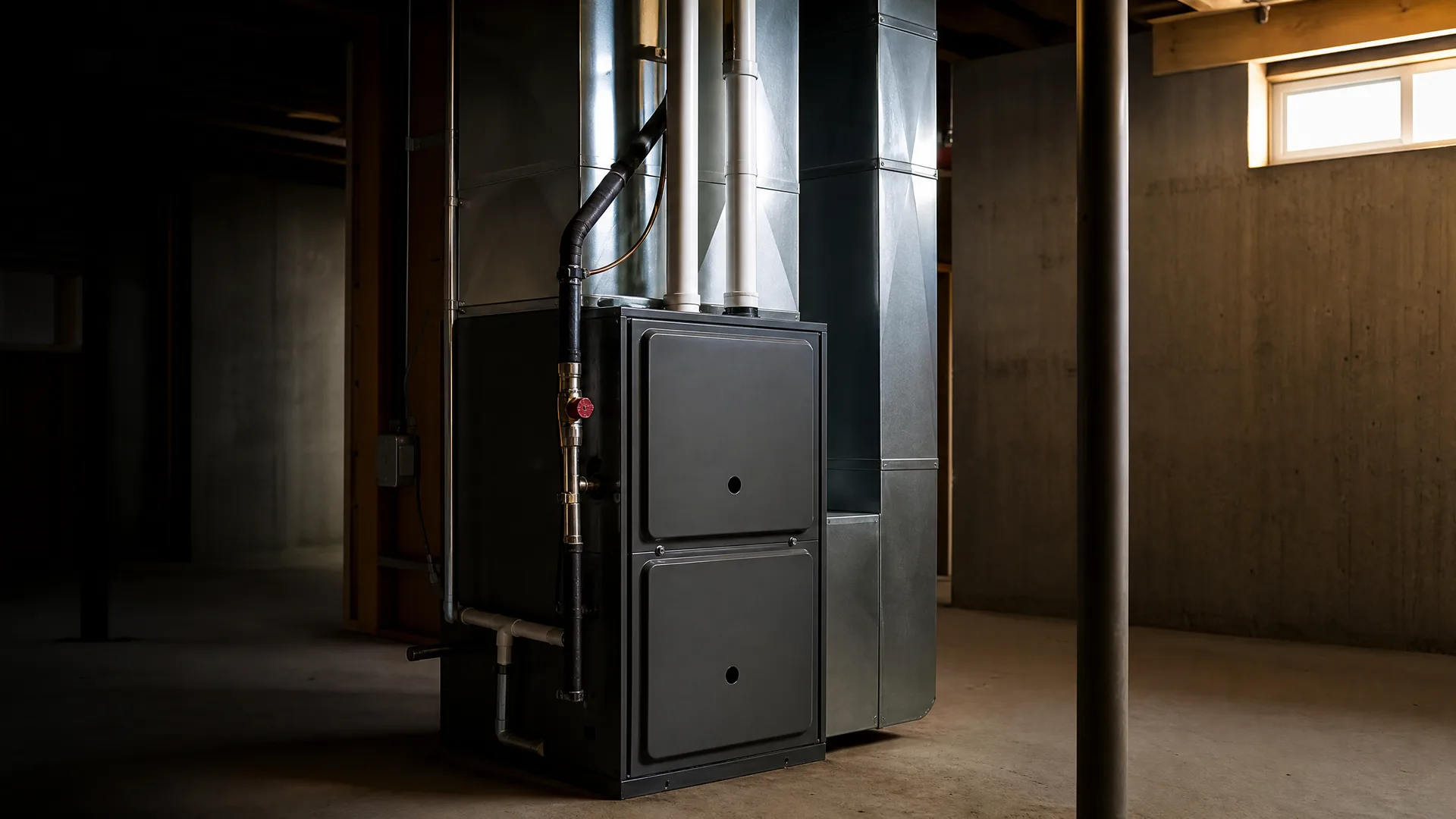
New equipment, same layout: PVC intake and flue, copper gas line, and ductwork sized to carry heat through the house without strain.
A metal cabinet this worn, with flexible gas lines and no clean flue run, is original equipment that has outlasted what it should be asked to do.
Where That Leaves You
A furnace older than 15 to 20 years, or one that short cycles, runs lukewarm air, or smells like it's burning dust, has earned a real inspection.
Baton Rouge winters rarely push a furnace past 42°F outside, so trouble often hides until the one or two cold nights that ask for full output.
A single worn part on a furnace under 15 years, like an igniter or flame sensor, usually points to repair rather than replacement.
Rust on the cabinet, soot near the burner, or a loose flue connection are signs the furnace is running on borrowed time, not just borrowed heat.
Instead of searching for a contractor, calling several, and explaining the same problem over and over, you can send one form and let someone sort the rest.
A furnace that heats evenly and shuts off clean is doing its job, whatever its age, and doesn't need to be replaced on a calendar alone.
Age tells you where to start looking, not what to decide. A furnace past 15 or 20 years deserves a real inspection, but what it's doing matters more than the number on the nameplate. Short cycling, lukewarm air, a burning dust smell, rust on the cabinet, soot near the burner, these are the furnace telling you something, whether it's eight years old or eighteen. Baton Rouge winters make this harder to catch than it would be somewhere colder. Nights around 42°F mean the furnace rarely has to work hard, so a cracked heat exchanger or a weak igniter can sit quietly for months until the handful of nights that finally ask for everything it has. That's the gap worth paying attention to. If the problem traces to one part on a furnace that's still within its working life, repair is the right call. If the cabinet is rusted through, the flue connection is loose, or the furnace is old and still struggling even on an easy winter, replacing it is the sounder move. You don't have to sort out which one applies by yourself. Instead of tracking down a contractor, calling a handful of them, and explaining the same symptoms each time, you can send one form and have that work handled for you. What matters is getting someone who can look at your specific furnace and tell you, plainly, which side of that line it's on.