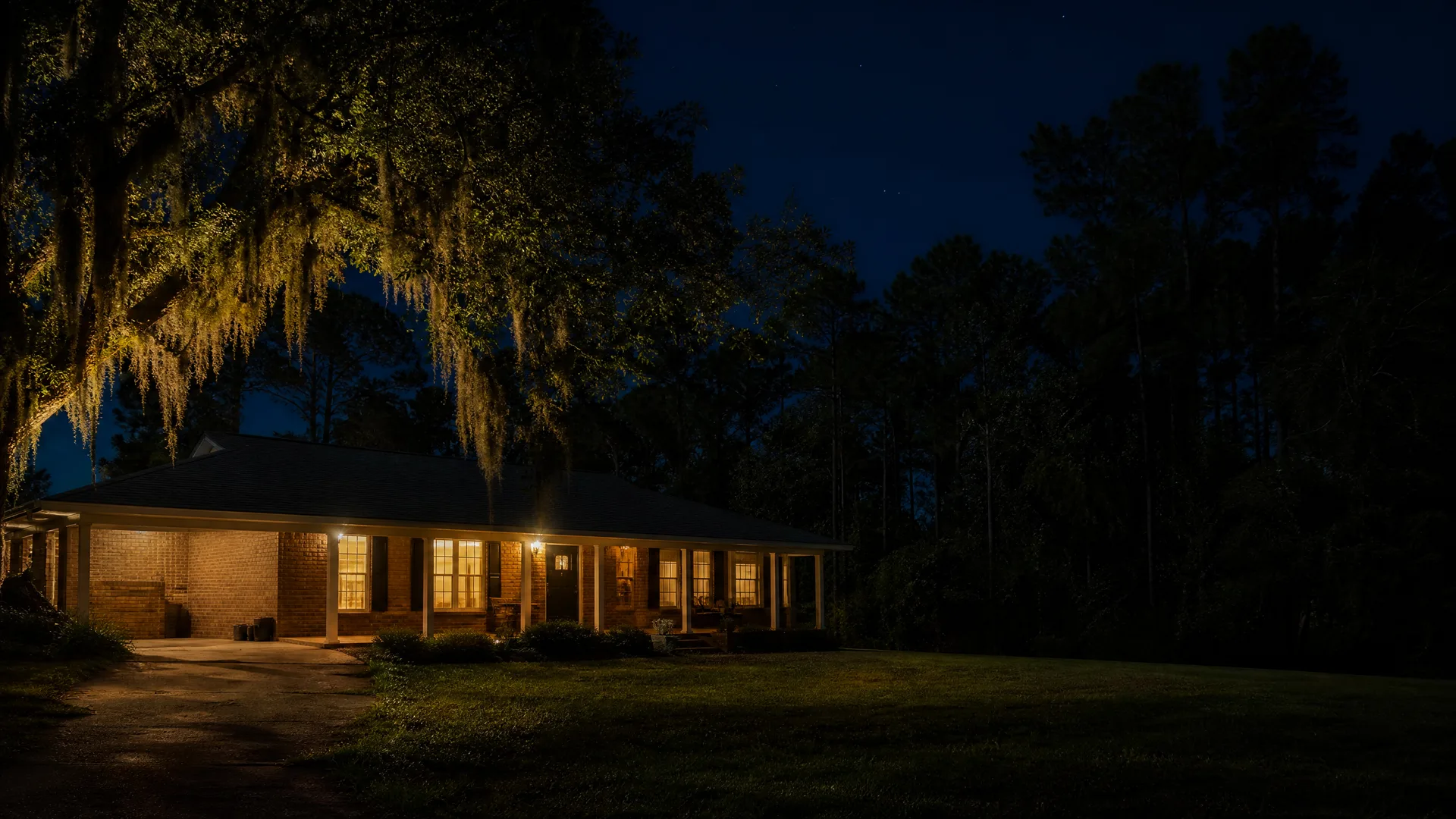
What to do when the heat goes out in Baton Rouge, LA
Start one formA cold house in Baton Rouge usually means an electric furnace that stopped doing its job, and most homes here have exactly that kind. Finding someone to look at it is its own chore. You end up searching around, calling a few places, telling each one the same story about what the house is doing, then waiting on quotes to come back so you can compare them against each other. This page skips that part. Fill in what's happening and it goes to one licensed contractor working in East Baton Rouge Parish, someone who works on furnaces like yours all winter and has a good idea what tends to fail on them. One call, not five. No explaining it over and over.
Most homes in Baton Rouge heat with an electric furnace, so when the heat goes out, start with the thermostat and the breaker panel before you assume the worst. Check that the thermostat is set to heat and a few degrees above room temperature, and check the breaker for the furnace and the air handler. Electric furnaces draw on multiple breakers, and it only takes one tripped to shut the whole system down. If the breakers are fine and the thermostat shows power but no heat comes out of the vents, the problem is likely inside the unit itself: a bad heating element or a failed sequencer that controls when the elements turn on. Louisiana winters are mild, but a house with small kids or older adults in it can get uncomfortable fast on the cold nights you do get, and an electric furnace problem does not fix itself with time.
How cold does it actually get here at night?
Winter nights average 42°F
Winter nights average 42°F here, so a furnace that quits usually has to be dealt with the same day, not worked around until the weekend.
Heat runs November through March
Heat runs November through March, about five months. That's most of your utility bill tied up in one piece of equipment.
64.7% of homes heat with electricity
64.7% of homes in the parish heat with electricity. If yours does too, a repair technician who knows electric furnaces specifically is who you need, not a generalist.
NOAA nClimDiv 1991-2020 · ACS 2020-2024
Living with it for a night
A mild night in Baton Rouge, you can get by without heat. Put on another layer, pull out a space heater for the room where everyone is sitting, and keep an eye on anyone very young, very old, or sick in the house. A space heater draws a lot of power on its own circuit, so don't run it off an extension cord or stack it with other things plugged into the same outlet. This buys you time if it's late and nobody can get to the house until morning. It doesn't fix anything, and if the nights stay in the 40s, it's not something to lean on for more than a night or two.
Why it's worth getting looked at sooner
An electric furnace that's cycling oddly, tripping the breaker, or blowing cold air is telling you something is already failing, and it's rarely something that gets better on its own. A tripped breaker that resets once and trips again means a part is pulling more current than it should, and running it that way again can damage it further. Waiting a week doesn't lower the price or make the repair simpler. It just means more nights on a space heater and a longer stretch before the house heats the way it should. Once it's diagnosed, you know exactly what's wrong and what it takes to fix it.




No calling every shop in East Baton Rouge Parish
You can check the thermostat and the breaker yourself, and sometimes that's all it is. When it isn't, you're looking at an electric furnace that needs a licensed hand on it, and that means finding a contractor who actually works on these year-round, not someone guessing at a system they rarely see. Baton Rouge doesn't get the kind of winters that keep a repair crew busy all season, so the ones who know electric furnaces well are worth finding on the first try instead of the third. Submitting this request puts it in front of one local contractor suited to the job, instead of you working the phone yourself, explaining the same problem to every company in the book and sorting through whoever calls back first. That's one less thing to manage while the house is cold and somebody in it is waiting on heat. The furnace still needs a diagnosis. Getting the right person to it is the part you can hand off right now.
How an electric furnace heats your home
- An electric furnace heats with resistance coils, not a flame, so there's no gas smell or pilot light to check.
- A sequencer brings the coils on one at a time, a few seconds apart, so the system doesn't trip the breaker at startup.
- The blower motor has to run before the coils are allowed to fire, so a bad blower can leave you with no heat at all.
- A limit switch shuts the coils off if airflow is restricted, which is why a clogged filter can cause a cold house even with power on.
- Each coil is protected by its own fuse or breaker inside the furnace, so part of the system can fail while the rest keeps working.
- Warm air takes a minute or two to reach the vents after the thermostat calls for heat, since the coils have to heat up first.
An electric furnace doesn't burn anything. Inside the cabinet are a few resistance coils, the same idea as a space heater, and a blower that pushes air across them and out through your ducts. When the thermostat calls for heat, the blower motor has to start first. Only after air is moving does a part called the sequencer let the coils fire, and it brings them on one at a time, a few seconds apart, instead of all at once. That staggered start is what keeps the furnace from pulling enough power at once to trip a breaker. It also means you'll wait a minute or two after the thermostat calls before warm air actually reaches the vents, since each coil needs a moment to heat up as it comes online. Each coil runs off its own fuse or small breaker inside the furnace, so it's possible for one coil to fail while the others still work. You might notice weaker heat rather than none at all. There's also a limit switch watching airflow across the coils. If the filter is clogged or a vent is blocked, that switch shuts the coils off to keep them from overheating, which can leave you with a cold house even though the furnace has power and the blower runs fine. None of this involves gas, a pilot light, or a flame to check. The failure points are electrical and mechanical instead.



The basement went dark around six, when the sun was already down and the furnace should have kicked on for the evening. It didn't. You notice the quiet first, that the usual hum under the floor isn't there. Down at the unit, the cabinet is cold to the touch and a thin haze of dust hangs in the air where the blower last pushed air through. No smell, no sound, nothing lit up on the control board. Upstairs the thermostat still reads the temperature you set, just not the one the house is actually at. It's November, and the house is starting to feel it.
Winter nights average 42°F
42°F is cold enough that a bedroom without heat gets uncomfortable fast, especially overnight when nobody's up to notice. It's not the kind of cold that cracks pipes, but it's enough that an electric furnace sitting idle for even one night is a problem worth fixing, not watching.
NOAA nClimDiv 1991-2020



Thermostat calls for heat and signals the furnace control board
Control board checks the limit switch and blower before starting
Sequencer brings the heating coils on one at a time
Blower motor starts pushing air across the hot coils



If the furnace still isn't heating, it needs a licensed hand
You checked the thermostat and the breaker. The furnace still isn't heating. At that point it's the sequencer, the coils, or the blower motor, and none of those are a fix you do yourself. It needs someone licensed to open the cabinet and test it.
That's usually the part people put off, not because the repair is hard to agree to, but because finding the right contractor is its own job. You'd be calling around, explaining the same problem to each one, waiting on callbacks, and sorting through quotes that are hard to compare. Here, you tell it once, to one licensed local contractor who works on electric furnaces all winter and knows what usually fails first. You're not fielding calls from three different companies. You're waiting on one, and getting back to a house that's warm again.


No phone calls to make