Tell us about the job
Takes about a minute. No obligation.
A contractor diagnosing a furnace in Rapides Parish looks first at the burner assembly and ignition system, because that is where a season of repeated cycling leaves its mark. Homes in Rapides Parish, LA run heat about five months a year, from November through March. By spring, the igniter has fired hundreds of times, the heat exchanger has expanded and contracted through every call for heat, and the burner ports have accumulated the residue that comes with sustained combustion work. A repair quote that skips those components and prices only what visibly failed is missing what drove the failure.
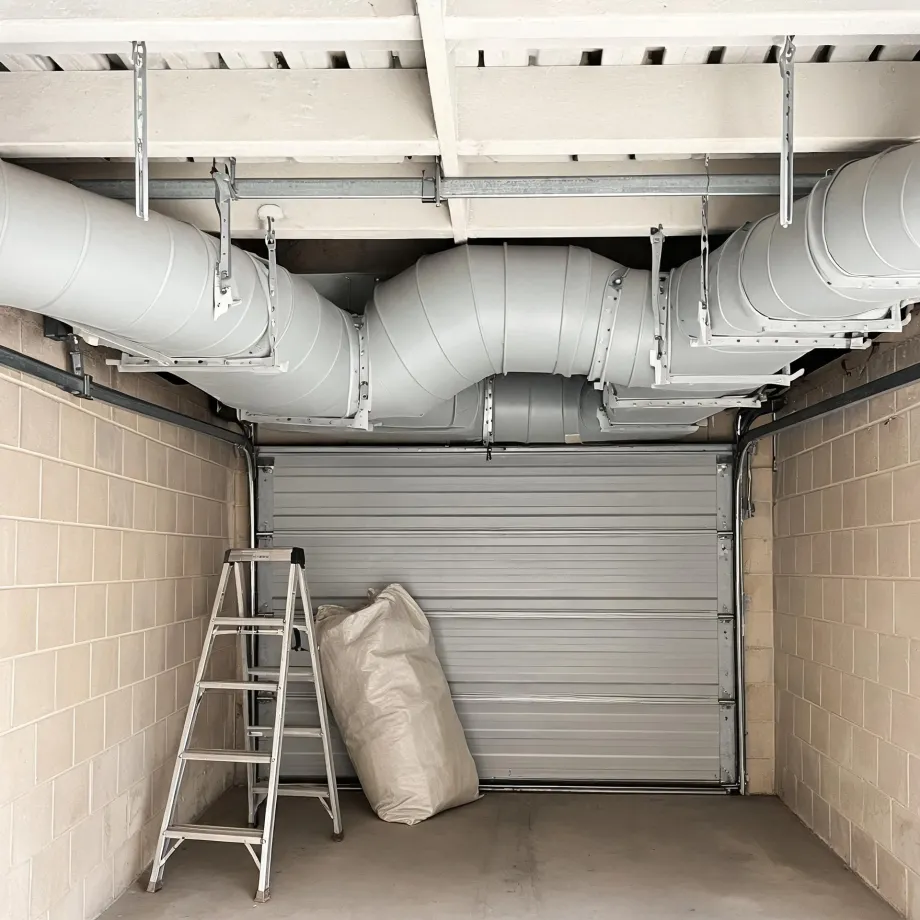
Ductwork that predates the equipment now running through it shapes a furnace repair call in ways that the unit itself does not. Half the homes in Rapides Parish, Louisiana were built in 1980 or earlier (2020-2024 ACS 5-year). When a contractor opens a furnace in a house from that era, what they find in the heat exchanger, the blower, and the flue tells part of the story. The duct layout tells the rest. Restrictions and mismatched sizing in the distribution system put strain on a furnace that a parts swap alone will not fix, and a contractor who prices only the box without tracing the airflow path will miss the reason the box failed.
The Parts of a Furnace a Contractor Checks First
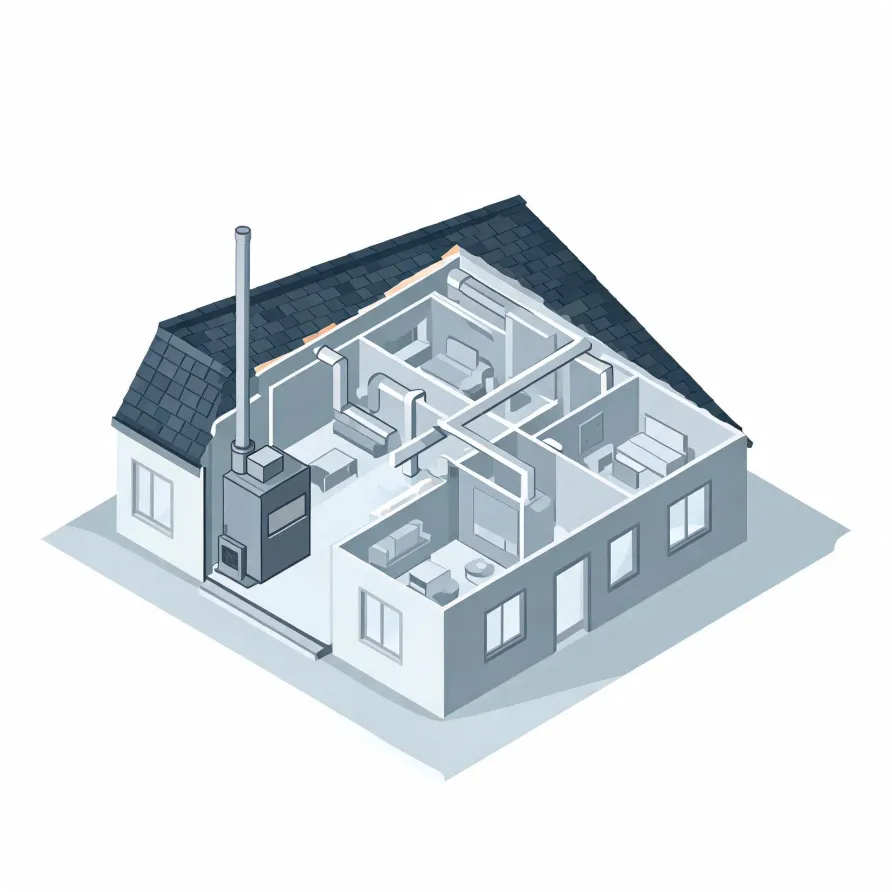
The heat exchanger sits at the core of the furnace cabinet, in the mechanical room or utility space, and it is the piece that warms the air before it moves through the house. When it cracks or corrodes, the furnace may run but deliver little heat, or trip the system off on a safety fault. The burner assembly fires just below it, and a weak or dirty burner is often where a contractor starts.
The blower motor sits at the base of the cabinet and pushes conditioned air into the supply plenum that leads to your registers. The igniter and flame sensor work as a pair near the burner: the igniter lights the gas and the sensor confirms the flame is there. When a furnace starts and then shuts off within seconds, those two parts are the first suspects.
The drawing shows a typical furnace layout, and a licensed contractor determines which components apply to the specific system in your home.
Get matched in Rapides ParishRapides Parish, by the numbers
124 severe weather events were recorded in Rapides Parish, Louisiana between 2015 and 2024.
NOAA National Centers for Environmental Information, Storm Events Database, bulk CSV export, events 2015-01-01 through 2024-12-31.Half the homes in Rapides Parish, Louisiana were built in 1980 or earlier (2020-2024 ACS 5-year).
U.S. Census Bureau, 2020-2024 American Community Survey 5-Year EstimatesRapides Parish, Louisiana holds 58,573 housing units (2020-2024 ACS 5-year).
U.S. Census Bureau, 2020-2024 American Community Survey 5-Year EstimatesOwners occupy 64.8% of the occupied homes in Rapides Parish, Louisiana (2020-2024 ACS 5-year).
U.S. Census Bureau, 2020-2024 American Community Survey 5-Year EstimatesCodes & Standards Governing Furnace Repair in Rapides Parish, Louisiana5 sourced rules and standards
What Happens When a Contractor Comes Out
Non-weatherized gas furnaces manufactured on or after November 19, 2015 must reach 80.0 percent AFUE.
Non-weatherized oil-fired furnaces manufactured on or after November 19, 2015 must reach 83.0 percent AFUE.
Mobile home gas furnaces manufactured on or after November 19, 2015 must reach 80.0 percent AFUE.
Non-weatherized gas furnaces manufactured on or after December 18, 2028 must reach 95.0 percent AFUE, up from the 80.0 percent minimum that applies to units manufactured before that date.
Licensing Rules for HVAC Repair in Rapides Parish, Louisiana
Louisiana requires an active state contractor licence: it is unlawful to engage or continue in the business of contracting, or to act as a contractor, without one.
Severe Weather Events in Rapides Parish
Extreme weather puts furnaces under strain, cycling them harder and more often than moderate conditions call for. How much of that load a furnace in Rapides Parish carries shapes how quickly parts wear and when repair work becomes necessary.
124 severe weather events, 2015–2024. Source: NOAA National Centers for Environmental Information, Storm Events Database.