Tell us about the job
Takes about a minute. No obligation.
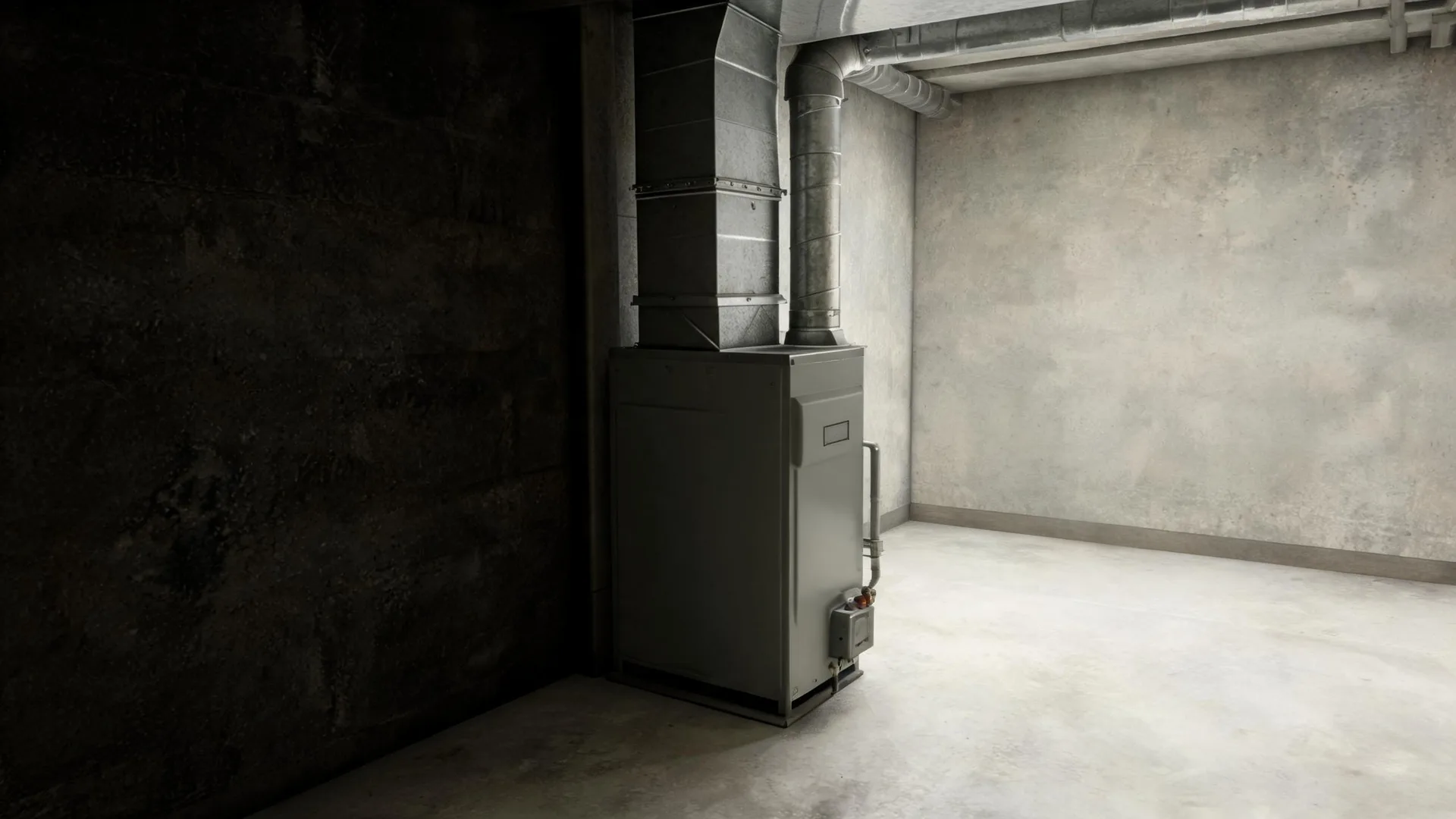
Sizing a furnace for this house is the first thing a contractor has to get right, because an undersized unit runs its burner and heat exchanger harder than they are built to run. Homes in East Feliciana Parish, LA run heat about five months a year, from November through March. A system that closes that gap by running longer cycles accumulates wear on the ignition components and heat exchanger faster than one matched to the actual load. Contractors quoting a replacement here pull a load calculation before settling on equipment, because the install decision is what determines how those parts hold up over years of use.
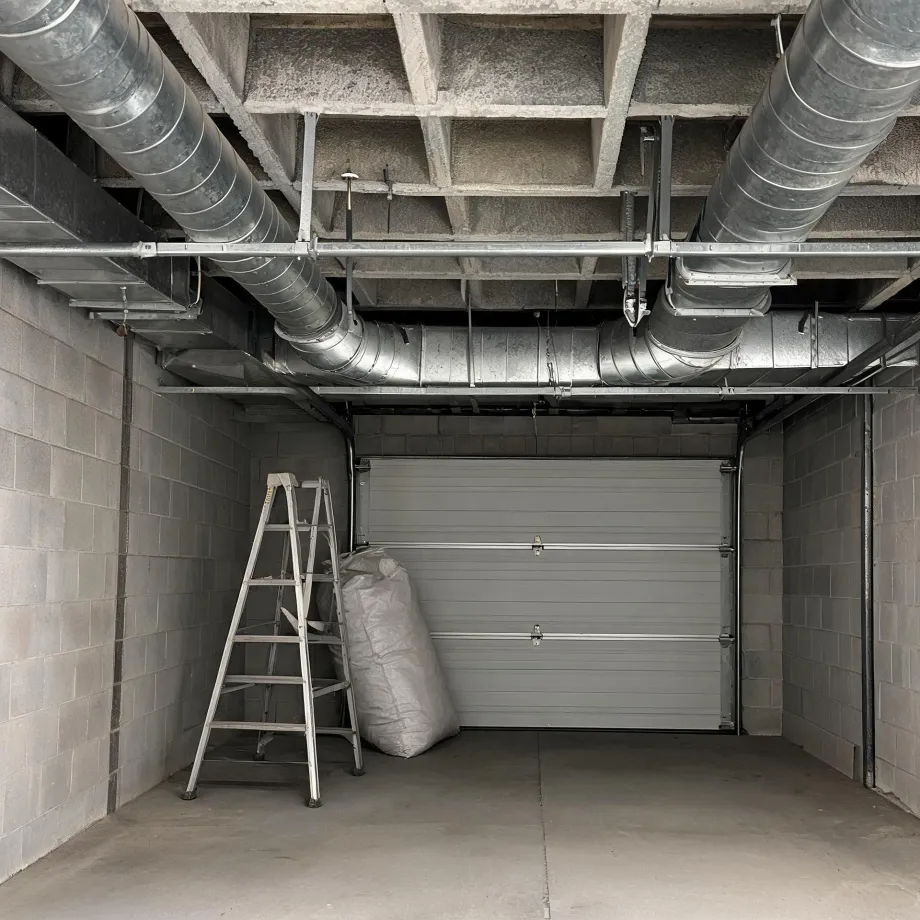
Ductwork laid in for an older system does not automatically carry a new furnace's airflow the way it was designed to. Half the homes in East Feliciana Parish, Louisiana were built in 1989 or earlier (2020-2024 ACS 5-year). That means a contractor assessing a furnace installation in much of this parish is measuring trunk lines and checking return capacity before the equipment selection gets settled, because ducts sized for an earlier generation of heating will restrict a modern unit or leave rooms undersupplied. The electrical side follows the same logic: service capacity that suited what was originally in the house gets verified against what the new furnace draws before any quote is final.
What Gets Installed With a New Furnace
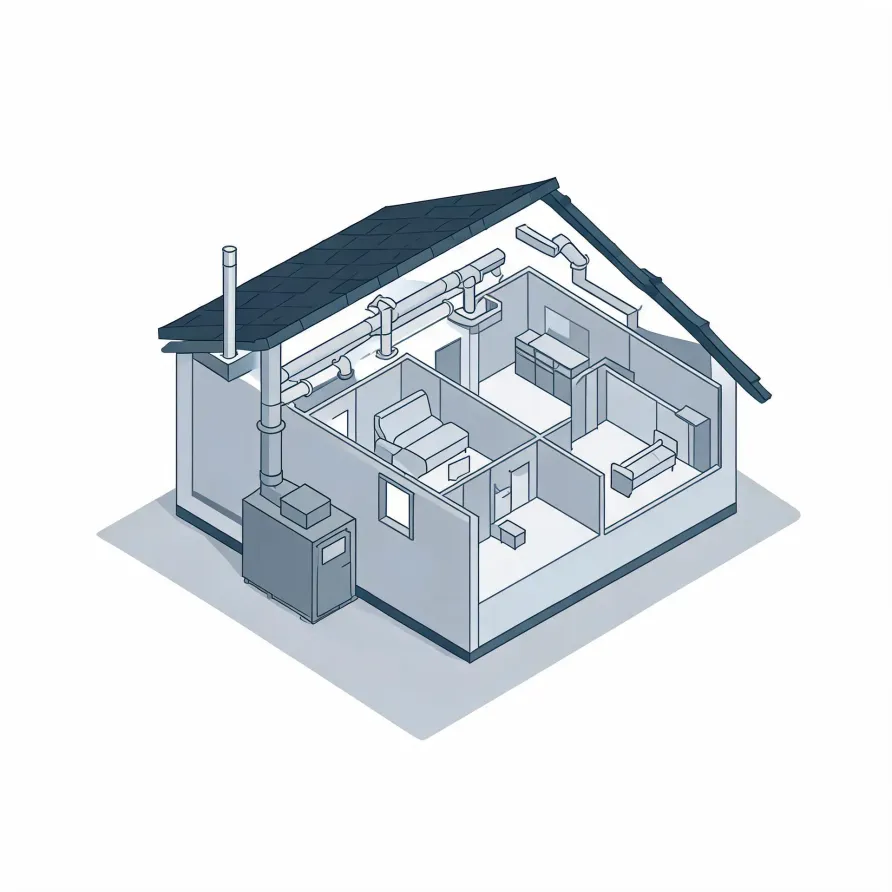
The furnace itself sits inside the house, most often in a basement, utility closet, or attic, and it is the unit that produces the heat. A heat exchanger inside the cabinet transfers heat to the air moving through the system, and a blower motor pushes that warmed air out through the supply registers in each room.
The flue pipe runs from the furnace to an exterior wall or through the roof, carrying combustion gases out of the house. Alongside the furnace, a thermostat mounts on an interior wall and serves as the control point, telling the system when to fire and when to stop.
The drawing shows a representative layout, and a licensed contractor determines exactly what applies to your home.
Get matched in East Feliciana ParishEast Feliciana Parish, by the numbers
27 severe weather events were recorded in East Feliciana Parish, Louisiana between 2015 and 2024.
NOAA National Centers for Environmental Information, Storm Events Database, bulk CSV export, events 2015-01-01 through 2024-12-31.Half the homes in East Feliciana Parish, Louisiana were built in 1989 or earlier (2020-2024 ACS 5-year).
U.S. Census Bureau, 2020-2024 American Community Survey 5-Year EstimatesEast Feliciana Parish, Louisiana holds 8,224 housing units (2020-2024 ACS 5-year).
U.S. Census Bureau, 2020-2024 American Community Survey 5-Year EstimatesOwners occupy 85.6% of the occupied homes in East Feliciana Parish, Louisiana (2020-2024 ACS 5-year).
U.S. Census Bureau, 2020-2024 American Community Survey 5-Year EstimatesCodes & Standards Covering Furnace Installation in East Feliciana Parish, Louisiana5 sourced rules and standards
What the Installation Actually Looks Like
Non-weatherized gas furnaces manufactured on or after November 19, 2015 must reach 80.0 percent AFUE.
Non-weatherized oil-fired furnaces manufactured on or after November 19, 2015 must reach 83.0 percent AFUE.
Mobile home gas furnaces manufactured on or after November 19, 2015 must reach 80.0 percent AFUE.
Non-weatherized gas furnaces manufactured on or after December 18, 2028 must reach 95.0 percent AFUE, up from the 80.0 percent minimum that applies to units manufactured before that date.
Licensing Rules for East Feliciana Parish, Louisiana
Louisiana requires an active state contractor licence: it is unlawful to engage or continue in the business of contracting, or to act as a contractor, without one.
Severe Weather Events in East Feliciana Parish
Weather shapes how hard a furnace has to work and how reliably it has to hold up over time. Equipment sized and installed for what East Feliciana Parish actually sees performs differently than equipment chosen without that picture.
27 severe weather events, 2016–2024. Source: NOAA National Centers for Environmental Information, Storm Events Database.